Garage Floor Epoxy · Aurora

Garage Floor Epoxy for Aurora, IL Homes and Shops

We grind the slab, lay four coats, and seal it under polyaspartic. You can park on the floor in about a day.

1 day installs · typical timeline
Free Quote

Free Garage Floor Epoxy quote.

We reply within 1 business hour. No spam, ever.

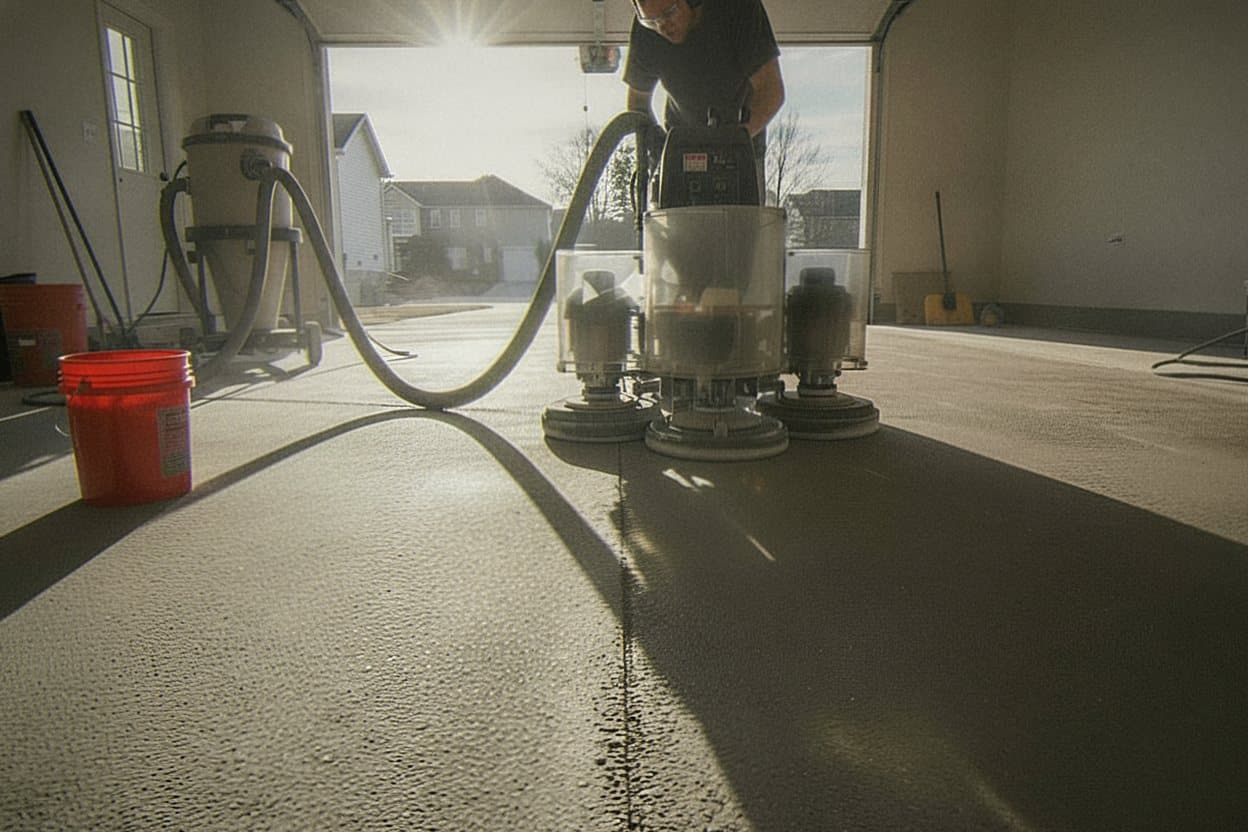
Diamond grinder opening a garage concrete slab.
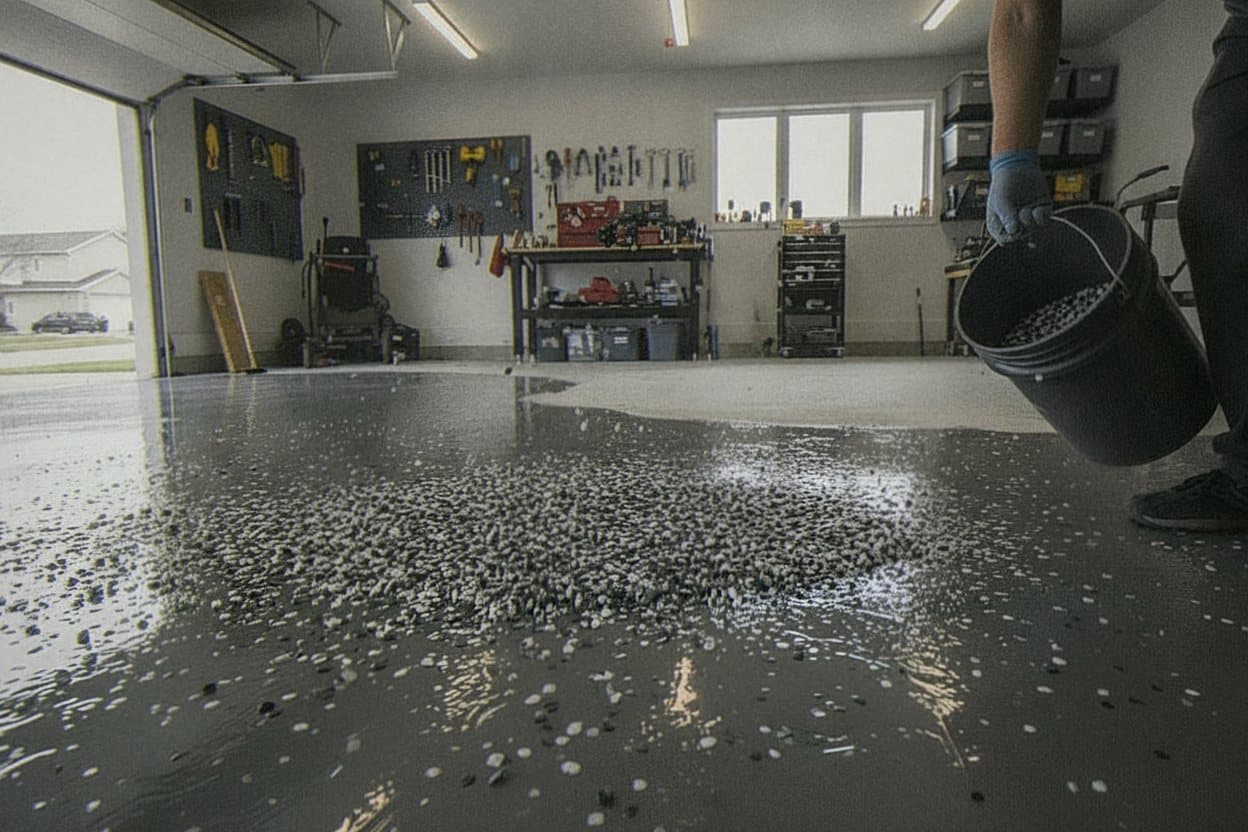
Epoxy base coat rolled across a bare garage slab.
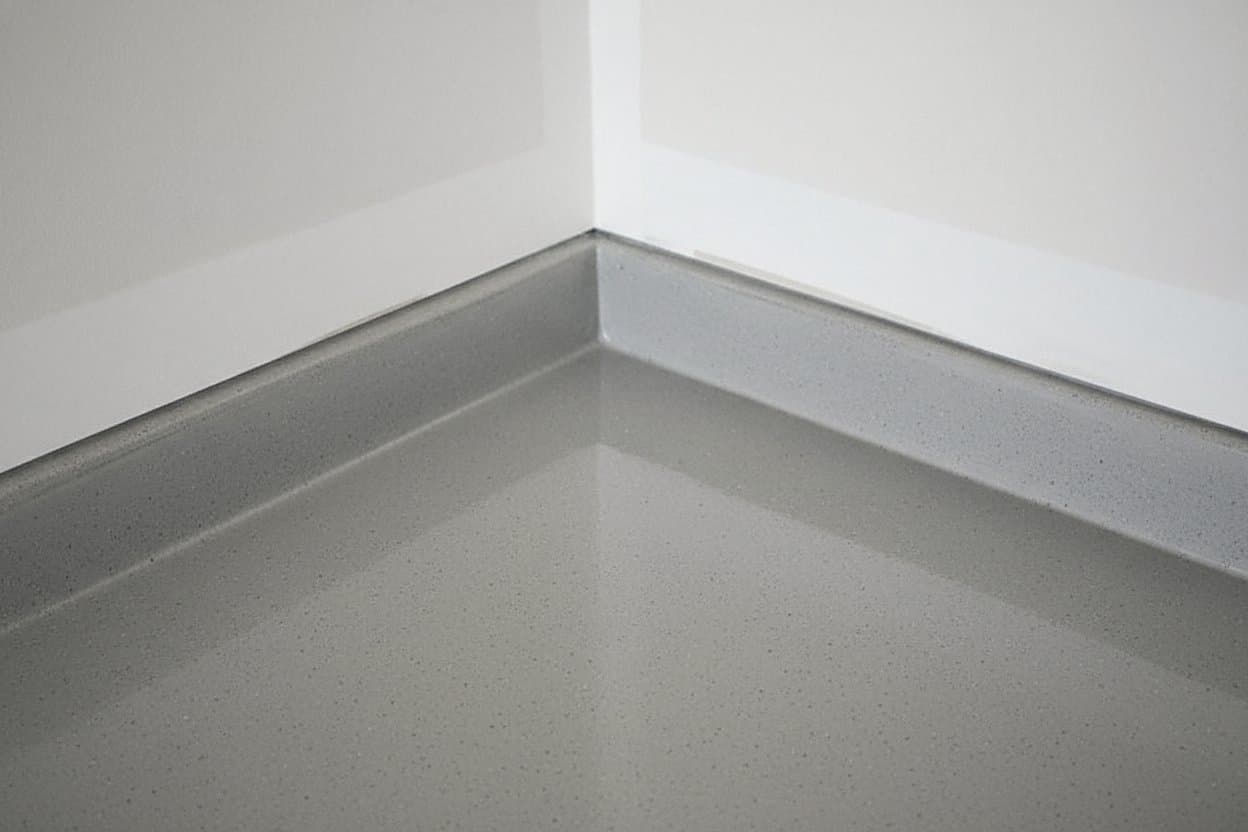
Epoxy floor edge detail along a garage baseboard.
What we install

What goes into a garage floor that lasts here

Most Aurora garage floors do not fail because the concrete is bad. They fail for a simpler reason. A thin coating went down over a slab that nobody opened up first, and that one shortcut is the real story behind almost every floor we get called out to fix. Bare concrete in Kane County takes a beating. Road salt, winter slush, and the daily swing from a frozen morning to a warm afternoon all chew at it. A floor that flakes near the door points to weak prep, not weak concrete. We read the slab first, then we match the system to what it actually needs, the same way we do across our other epoxy systems.

The build is four coats over a profiled slab. First we grind. A diamond head cuts into the surface until it carries a rough tooth that resin can grab and hold for years through hot summers and salted winters alike. Then we prime, lay a pigmented base, and broadcast vinyl flake into the wet coat until the floor will not take a single chip more. The next morning we scrape the loose flake and seal the whole thing under a clear polyaspartic topcoat. That last layer earns its keep. It shrugs off hot tires, gear oil, and the salt your car drags home from I 88.

  • A standard two bay garage usually wraps in one working day, and you can walk on it that same evening.
  • Cars roll back onto the slab about a day after the topcoat goes down.
  • Flake texture adds real grip when boots track in salt and slush through a long February.
  • The finish holds up to brine, brake fluid, gear oil, and the odd antifreeze spill near the bench.
  • Every coat goes down with the garage doors shut, and a portable heater holds the slab at cure temperature even when an Aurora cold snap rolls through.
The slab is rarely the problem. The coating spec usually is, and getting that one part right is the whole job from the first grind to the last clear coat.

We work garages all over Aurora and the towns around it. North Aurora, Montgomery, Naperville, and Oswego are all on our regular run. That means we know how these slabs behave after a few hard Fox Valley winters. When you call, you reach the crew that will be standing on your floor, not a call center. We give you a straight read on what your slab needs and a date we can actually hold. No runaround. No vanishing once the deposit clears.

Tell us a little about your garage and how you want it to look. We will walk you through the system, the color options, and the timeline. Then we lock in a day that works for you. Call now and we will get you on the schedule.
Materials

Why each of the four coats matters

The grind is the part nobody sees. It is also the part that decides everything else. We open the top skin of the concrete so the primer can sink in and lock down deep. A floor laid over a smooth, sealed slab has nothing to bite into, which is exactly why the kits from the warehouse store peel at the first hot tire. Once the profile is right, the primer wets into the open pores and becomes the anchor for every coat above it.

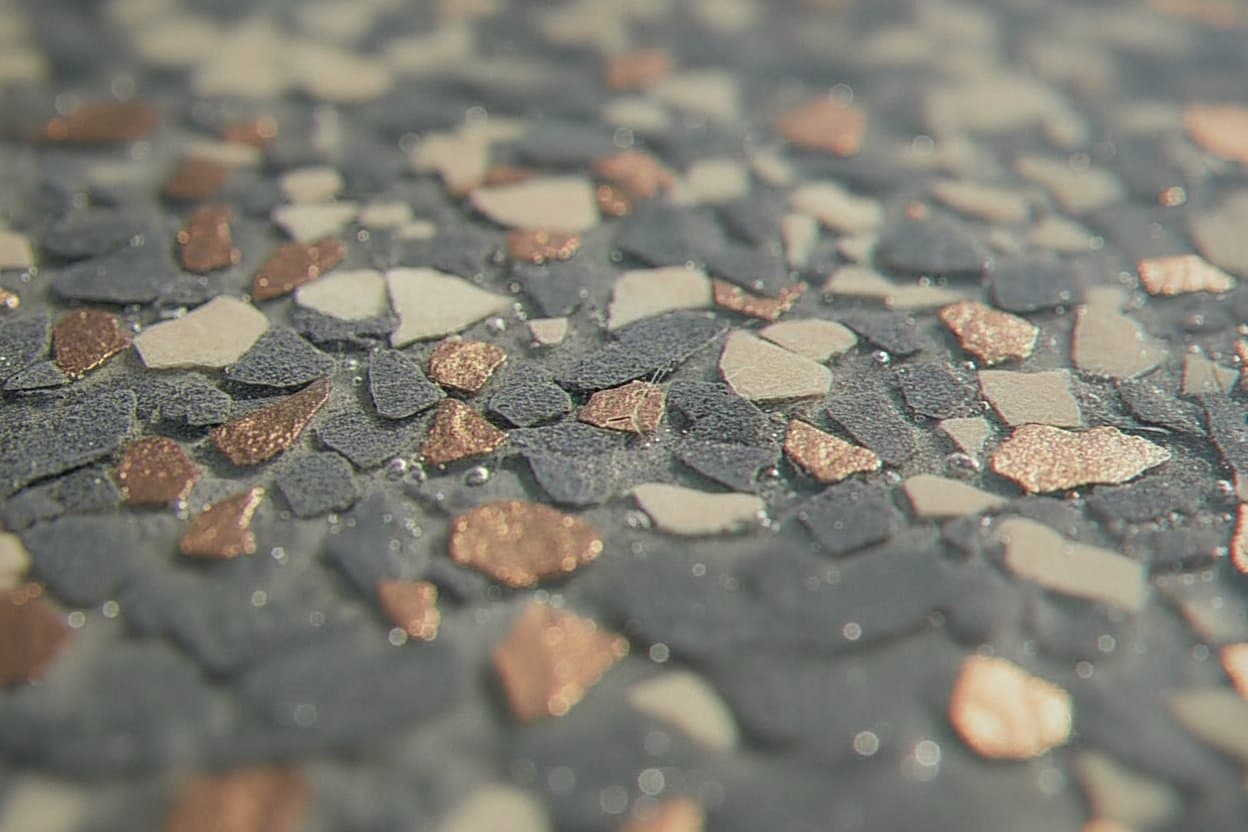
The base coat carries the color and builds real film thickness. Vinyl flake comes next. We throw it by hand until the wet resin simply will not accept another chip, and that flake quietly does two jobs at once. It hides minor cracks and old stains, and it adds a fine grip underfoot. The clear polyaspartic on top ties the whole floor together. It takes the daily abuse so the color buried below it stays clean for years.

  • Four coats over a profiled slab: prime, base, flake broadcast, then a clear topcoat.
  • Flake locks into the wet resin by gravity alone, so no glue is needed.
  • The polyaspartic topcoat is what takes the salt, the hot rubber, and the gear oil.
  • The diamond grind is the step that makes the whole coating actually stick.
Close-up of flake epoxy surface on a garage floor.
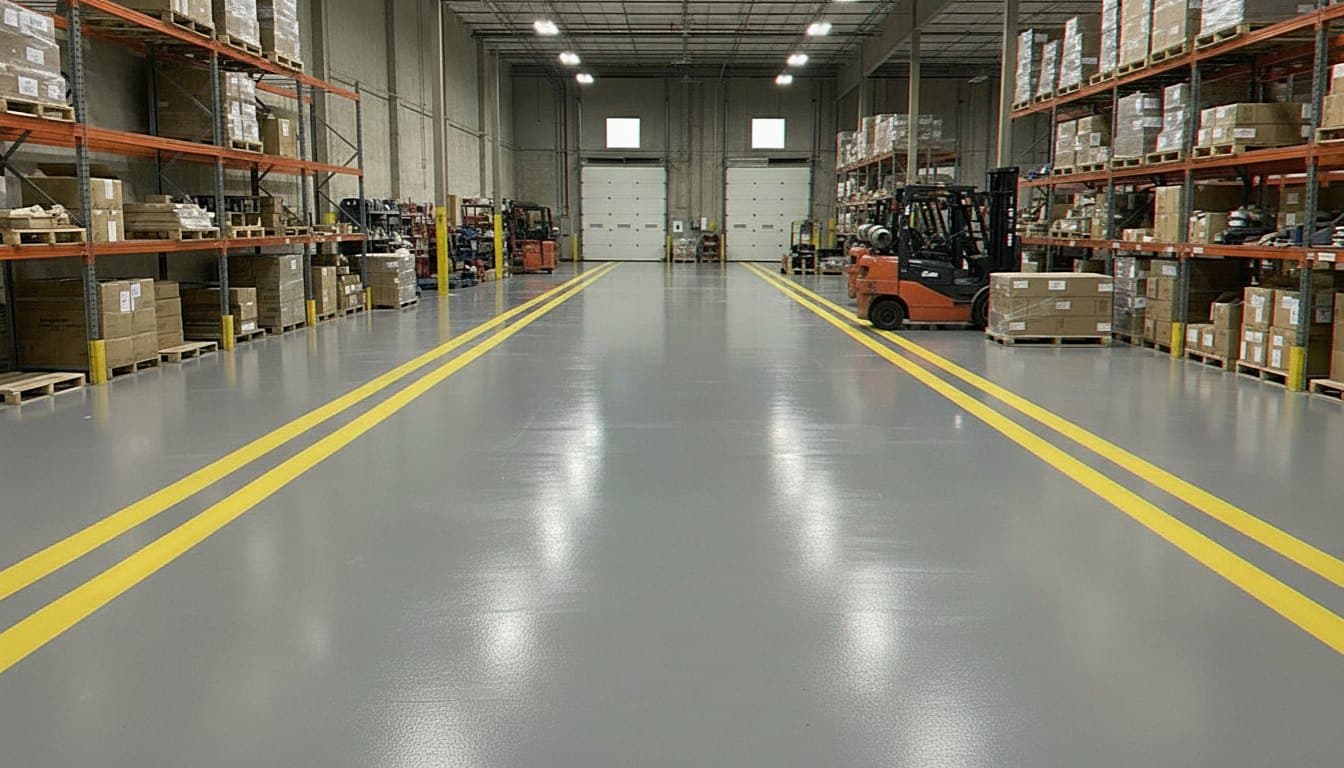
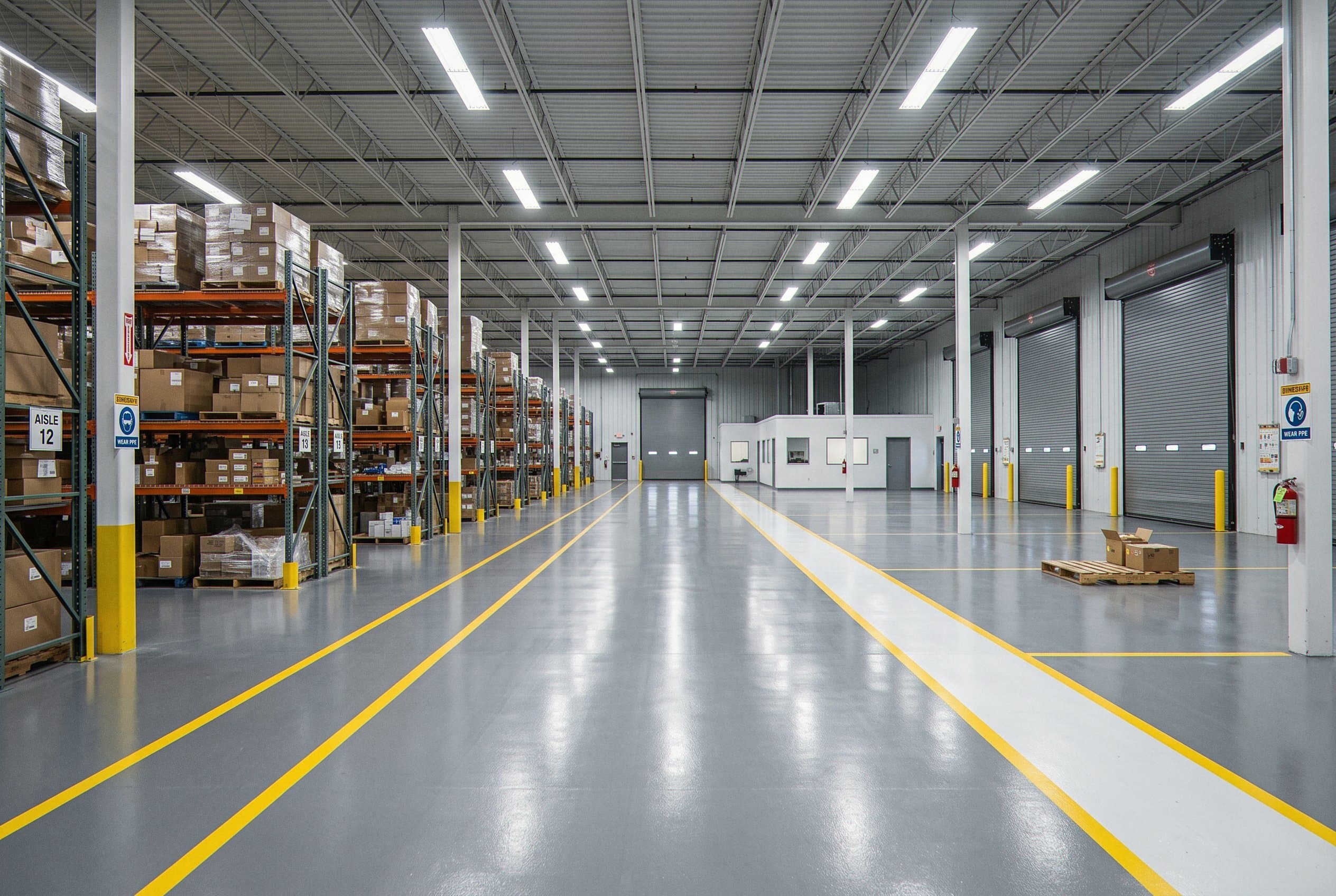
Wide warehouse interior with gray epoxy-coated floor.
What about the alternatives?

Other ways people try to refresh a slab

Plenty of products promise a fresh garage floor for less effort. Most of them just trade a quick weekend now for a full redo a year or two later. Here is how the common options actually hold up against a real Illinois winter.

Latex porch paint

It goes on like wall paint and lifts the first time a warm tire parks on it. A cosmetic pass at best, and a short one.

Skip

Interlocking PVC tiles

They snap together fast and hide a rough slab. The catch is grit. It works under the seams, and the tiles trap road salt and water.

Acceptable

Penetrating concrete sealer

It protects bare concrete from the inside and cuts the dusting. Still, you are left with a plain gray floor and no color or grip.

Acceptable

Warehouse store epoxy kit

A thin single coat over a slab you rolled yourself. It looks fine for a season. Then it peels at the door once winter hits.

Skip

Full epoxy and polyaspartic install

Four coats over a properly ground slab. This is the build that takes hot tires and hard Aurora winters in stride for the long haul.

Recommended
How it goes

From quote to walk-on, fast.

01

Your inquiry

Call or send the short form with what is going on at your place. A sentence or two is plenty for the first step.

02

We talk it through

We go over the situation on the phone, ask the questions that matter, and tell you what we would do next.

03

A clear plan

You get a plain-language rundown of the work, the order it happens in, and what to expect on the day.

04

The work gets done

Our crew shows up when we said, does the job, and walks you through the result before leaving.

Before you book

Questions worth asking before you sign

A good installer will answer all of these without flinching. Here is what we tell Aurora homeowners before any work begins.

What method are you using to open the slab?
We grind. A diamond grinder cuts a real profile into the concrete so the primer can bond deep into it. Acid etching is the shortcut some crews take instead. It looks similar on day one, yet it leaves a weaker surface that coatings let go of within a year. If an installer skips the grind, that is the very first place the floor will fail.
How are you treating the cracks in the slab?
We chase out each crack, fill it with a rigid patch, and grind it flush before any coating goes down. A filled crack can still shadow through later as a faint line. We tell you that up front. What we will never do is bury an open crack under the flake and quietly call it solved.
Will the floor really take hot tire contact?
Yes. That is the whole reason for the polyaspartic topcoat. Cheap coatings soften under a hot tire and lift when you back the car out, a failure the trade calls tire pickup. A properly cured polyaspartic film stays hard and shrugs that off completely. It is the single biggest difference between our build and a kit off the store shelf.
What does the color and flake choice look like?
You pick the blend from real chip samples. We look at them in your actual garage light before we order a thing. Common picks around here run from warm grays into copper and slate mixes. We help you land on something that hides dirt, suits the house, and still looks right a decade from now.
When can the cars come back in?
You can usually walk on the floor that same evening. Cars come back about a day after the topcoat goes down, once it has cured enough to take both the weight and the heat. We hand you the exact window before we start, so nothing gets parked on it too soon.
Aftercare

Living with the floor over the years

A finished garage floor asks very little of you. Most of the care is simple cleanup, the kind that keeps grit from grinding away at the gloss over time. Road salt is the one thing worth staying on top of through an Aurora winter, since it can dull the surface if it sits there for weeks. A quick rinse and a soft mop handle nearly everything else.

  • Sweep or dust mop weekly so fine grit never gets the chance to scratch the topcoat.
  • Rinse off road salt and slush after the worst stretches of winter weather.
  • Wipe oil or fluid spills when you spot them, since a rag and warm water is plenty.
  • Use a pH neutral cleaner for the occasional deep mop, and skip the harsh degreasers.
  • Slip felt pads or a mat under jack stands, floor jacks, and anything else heavy or sharp that you set down on the surface for a while.
Warehouse floor with epoxy coating under overhead lights.
FAQ

What Aurora homeowners ask about garage epoxy

Do you install epoxy flooring across the Aurora area?
Yes. We install epoxy flooring throughout Aurora and the nearby Kane County and Kendall County towns, including North Aurora, Montgomery, Oswego, and Naperville. Our own crew does the prep, the pour, and the finish, and we pick up the phone when you call. Set a time with us and we will come read your concrete in person.
What separates epoxy from polyaspartic, in practice?
Epoxy lays down a thick, hard base that grips clean concrete and gives the floor its body. Polyaspartic is different. It cures fast, sometimes in a single day, and it holds its color better under harsh light. On most Aurora garage floors we combine the two, so you get a tough base under a quick, durable top coat.
How are coating jobs typically priced in this market?
It depends on the floor. Size is the biggest factor, and the condition of your slab matters too, since cracks and worn old coatings call for extra prep. The system you choose shifts things as well, because a plain solid color is simpler to install than a metallic or flake finish. We measure the space, read the concrete, and walk you through the full scope before any work begins.
Are winter installs realistic in the Aurora area?
They are. Aurora winters bring real cold and snow, so we track the slab temperature and the humidity before we coat anything. A heated garage helps a lot. Some polyaspartic systems also cure well in cooler air, and we time the work so your epoxy flooring sets correctly through the colder months.
Will the floor pick up or stain under hot tires?
A fully cured floor resists hot tire pickup, the problem where warm rubber tugs at a weak finish. Prep is everything. We grind the concrete to a clean profile and let each coat cure fully before you park on it. We also lean on polyaspartic top coats, since they shrug off heat and harsh stuff. Done right, your epoxy flooring stays put and wipes clean.
Ready when you are

Let's make your next steps easier

Tell us what is going on at your Aurora home and we will walk you through the options. One call or one short form is all it takes.

Call (331) 256-2716Make your inquiry
CallContact us