
Polyaspartic Epoxy Coatings · Aurora

Polyaspartic Coatings in Aurora, IL

A clear top coat that cures fast and stays clear. We lay it over your epoxy in a single day.

1 day installs · typical timeline
Free Quote

Free Polyaspartic Epoxy Coatings quote.

We reply within 1 business hour. No spam, ever.

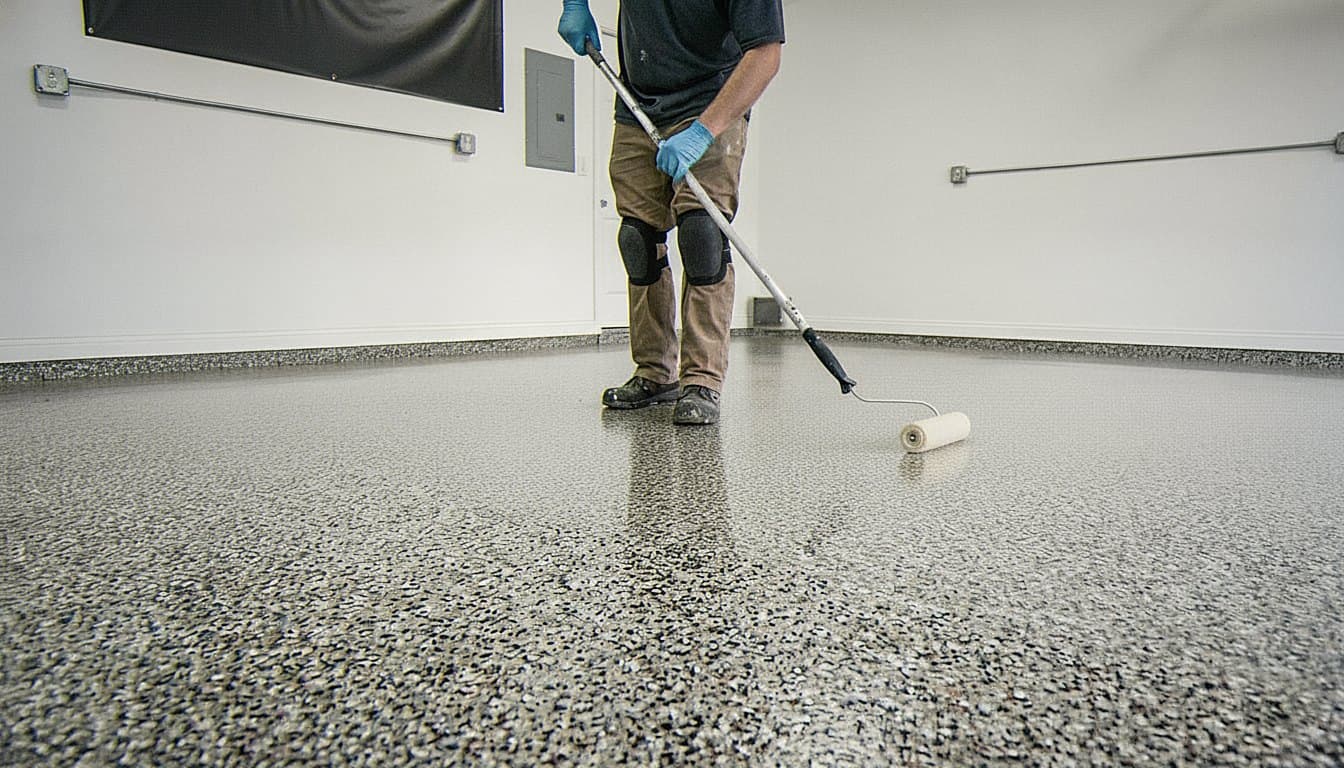
Garage with flake epoxy sealed under polyaspartic topcoat.
Wide garage floor with clear polyaspartic over flake.
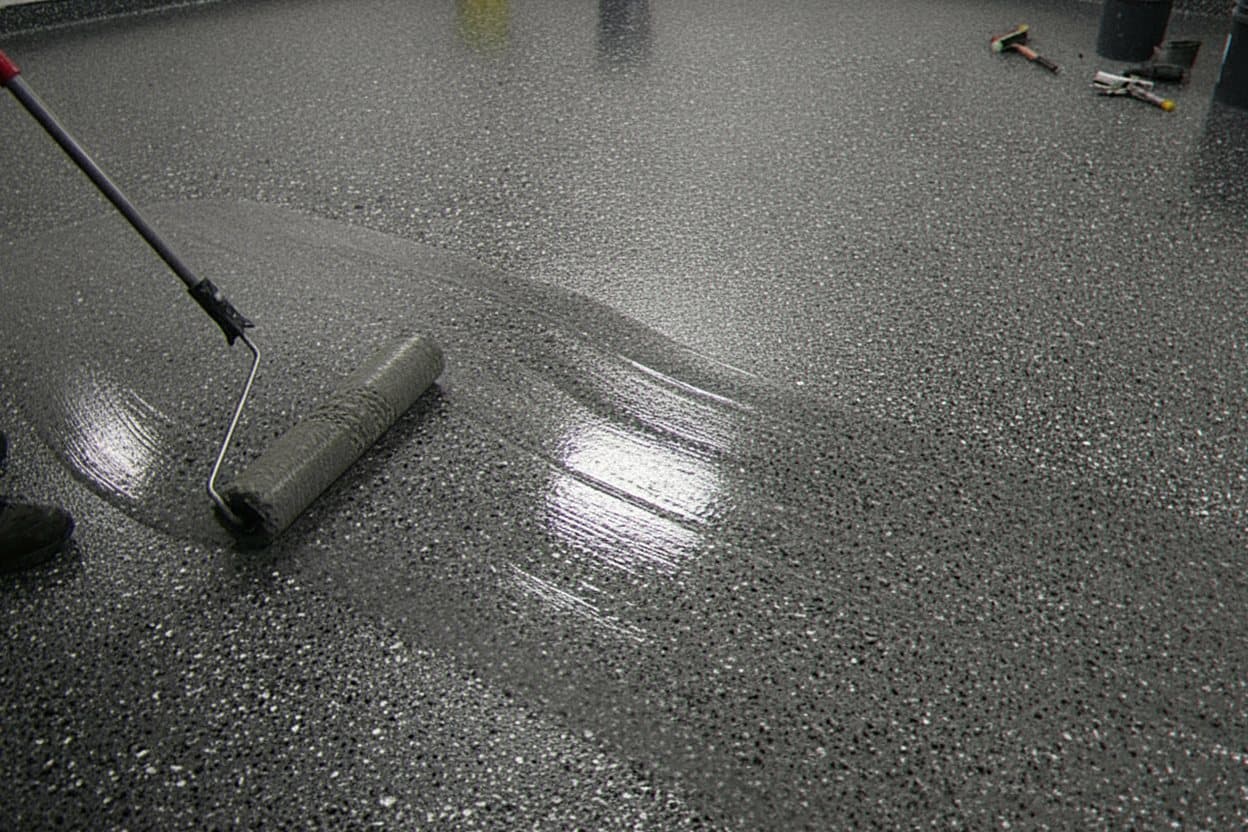
Roller applying polyaspartic topcoat over cured flake base.
What we install

Polyaspartic and epoxy are not the same product

People mix up these two coatings all the time, and we get why. They look alike in the can. They do very different jobs on your slab. Epoxy is the base. It grips the bare concrete and gives the floor its body and color. Polyaspartic is the clear top coat. It goes on last, and it takes all the wear. We pour the epoxy first. Once it sets, we seal it with the clear coat. Two layers, two roles, one floor.

The big draw is speed. Most of these top coats are dry enough to walk on in about two hours. That pace lets our crew wrap a garage in one day. It also sets in cold air. Aurora winters get rough, and many coatings stall when the slab turns cold. This one keeps curing when the others quit, so we can work through more of the year than an epoxy alone allows.

  • Cures fast. Most floors are ready to walk on in about two hours.
  • Stays clear in the sun. The sun does not turn it yellow the way cheap sealers do.
  • Shrugs off road salt, oil, and brake fluid without staining.
  • Bonds with the epoxy underneath. There is no weak plane between the layers.
  • Beats tire pickup, so hot summer tires will not peel the finish off the slab.
We pour the epoxy, let it set, then seal it with a clear top coat. One crew, one day, one solid floor.

Tire pickup is the flaw that wrecks most garage floors. Hot tires grab a soft coat and lift it. You park, the rubber cools, and it grips the floor. Pull out the next day, and a patch of finish rips away with the tread. This top coat is hard enough to ignore that pull. It sets up tougher than plain floor sealer, and that hardness is what stops the grab.

If you want a garage floor that holds up in Aurora, the top coat is where the job is won or lost. Call us and we will walk you through the build, step by step. We do the work ourselves. We answer our own phone too.
Materials

The chemistry, briefly, with no marketing fluff

Here is the short version. Polyaspartic is a kind of polyurea, and that clear backbone in the resin is the trick that keeps the film clear for years. Plain coatings break down under the sun and go yellow. This one does not. The look you see on day one is the look you keep.

We control two things on site, and both decide how the floor turns out. The first is film thickness, which we read in mils as we roll. Too thin and it wears through. Too thick and it can cloud or peel. The second is the recoat window, the short stretch of time when the epoxy can still grab the clear coat above it. We track both as we go, so the two layers fuse into one solid floor.

  • Backbone holds the film clear under daylight for the life of the floor.
  • Goes down at the right mil thickness, so it wears even and does not cloud.
  • Lands inside the epoxy recoat window, so the layers fuse as one.
  • Sets up harder than plain floor sealer, which is what stops tire pickup.
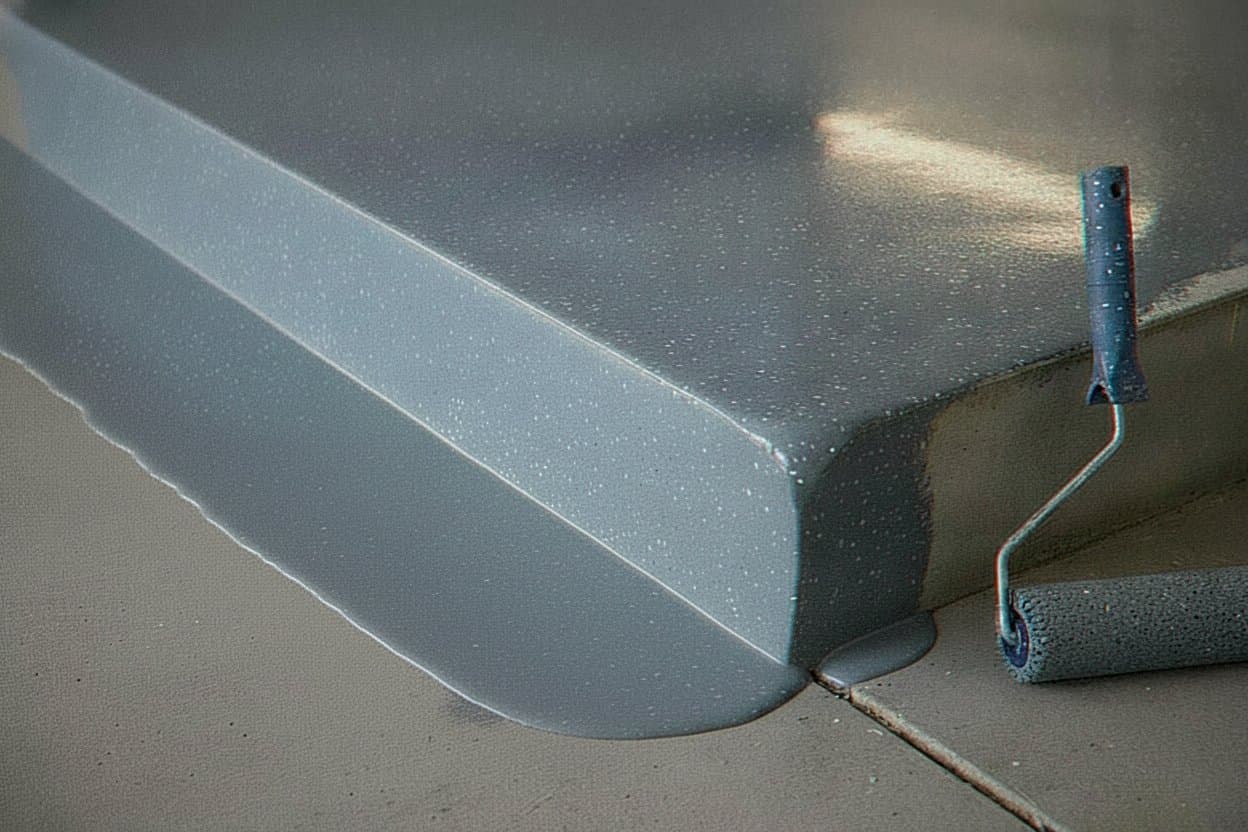
Polyaspartic topcoat edge over a cured flake floor.
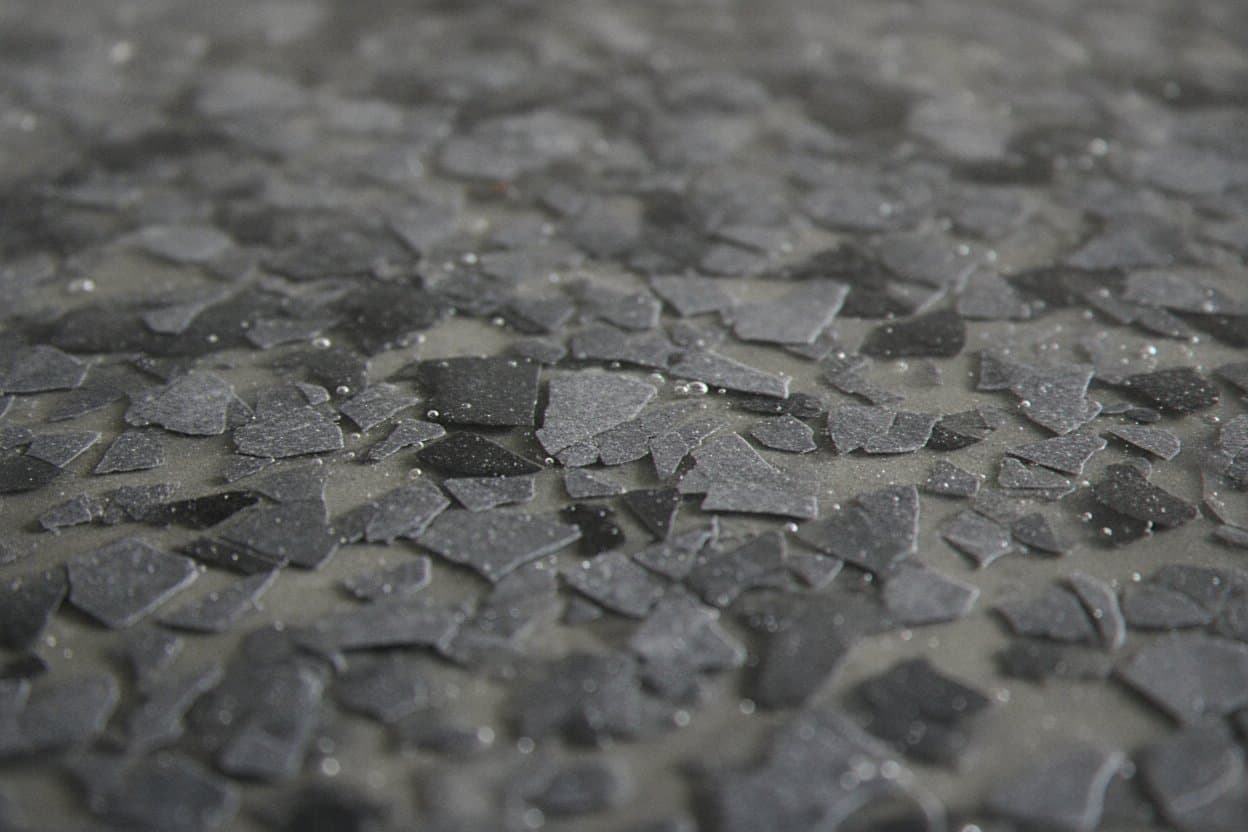
Close-up of polyaspartic film over charcoal flake.
What about the alternatives?

Polyaspartic versus the other topcoat candidates

This is not the only clear coat on the market. Here is how it stacks up against the ones we get asked about most.

Clear epoxy as a topcoat

Looks great on day one. But it stays soft, it yellows in the sun, and the first round of hot summer tires will lift it right off the slab. We skip it for garages.

Skip

Solvent type polyurethane

Hard and clear, no doubt. The fumes are strong though, so the cure drags on and the whole space has to air out before anyone parks again. It works. Our top coat just does the same job faster.

Acceptable

Water based acrylic floor sealer

Cheap, and easy to roll on. It seals the slab. The film stays thin and soft, though, so it holds up in a quiet basement but fails fast under the weight and heat of a busy garage.

Acceptable

Urethane mortar

Very tough, built for plants and busy kitchens. It is thick, and it is a lot of floor for a home garage, so most houses get far more than they ever need. Great surface. Just overkill at home.

Recommended

Polyaspartic

Fast cure, stays clear, beats tire pickup. This is our default top coat for Aurora garages, and it is the reason most of the floors we lay still look sharp years down the road.

Recommended
How it goes

From quote to walk-on, fast.

01

Your inquiry

Call or send the short form with what is going on at your place. A sentence or two is plenty for the first step.

02

We talk it through

We go over the situation on the phone, ask the questions that matter, and tell you what we would do next.

03

A clear plan

You get a plain-language rundown of the work, the order it happens in, and what to expect on the day.

04

The work gets done

Our crew shows up when we said, does the job, and walks you through the result before leaving.

Before you book

What to confirm about the polyaspartic pass before booking

A few quick questions tell you whether a crew knows the product. Ask us these before you book, and ask anyone else too.

What temperature and humidity will the install run at?
This top coat is picky about the air. We check the slab temperature and the dew point before we ever open a kit, because a slab that runs too cold or too damp will make the coat blush or fail to bond. So we plan around the weather. In Aurora that often means an early start on a dry, clear day.
How much polyaspartic is going on the floor, in mils?
Thickness is never a guess for us. We pour to a set mil target and read the film as we go, since too thin wears through and too thick can cloud or lift right back up. Ask any crew for that number. If they cannot give it to you, they are not measuring.
Is the polyaspartic landing inside the epoxy's recoat window?
The clear coat has to go down while the epoxy can still bond to it. Miss that window. The layers will not fuse, and you end up with two loose sheets that peel apart instead of one solid floor. We plan the whole day around that timing.
Are there cases where polyaspartic is the wrong topcoat?
Yes, and we will tell you when. On a damp basement slab with no vapor block, a hard top coat can trap moisture under it and lift, so we test the slab first and may steer you toward a different build. We would rather lose the upsell. Coating a floor we know will fail helps nobody.
Can the topcoat be refreshed later without ripping the floor out?
Yes, and that is one of the best parts. A clear top coat can be scuffed and recoated years down the road, which means we never tear out the whole floor just to bring back the gloss. We clean it. We abrade the surface and lay a fresh clear coat on top, and the shine comes right back.
Aftercare

How a polyaspartic floor ages across the years

A floor like this asks for very little. The surface is dense, so dirt and salt sit on top instead of soaking in. Most owners just sweep and mop, and that is about it. Here is what to expect as the years pass, plus the few small habits that keep the floor sharp.

  • Sweep grit often. Sand and road salt are what dull any clear coat over time.
  • Mop with plain water or a mild floor soap. Skip harsh acids and strong degreasers.
  • Wipe oil and brake fluid when you see them. The coat resists stains, but fresh is easier.
  • In winter, let the snow melt and squeegee the slush out. Standing salt water is the main wear.
  • After several years the shine may soften in the tire paths. A quick recoat brings it back.
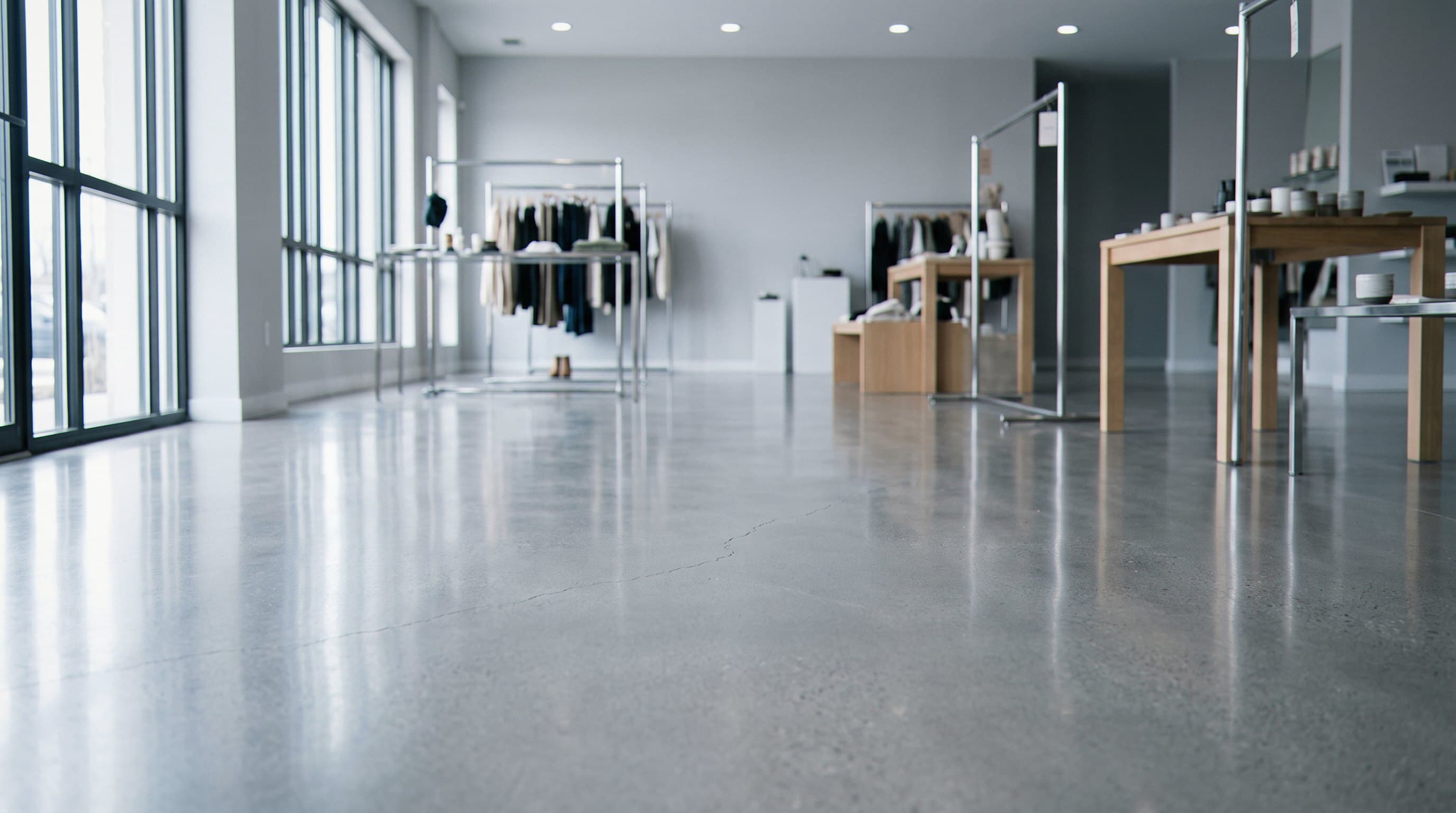
Wide polished concrete floor with glossy finish.
FAQ

Common questions about polyaspartic in Aurora, IL

Do you install epoxy flooring across the Aurora area?
Yes. We install epoxy flooring throughout Aurora and the nearby Kane County and Kendall County towns, including North Aurora, Montgomery, Oswego, and Naperville. Our own crew does the prep, the pour, and the finish, and we pick up the phone when you call. Set a time with us and we will come read your concrete in person.
What separates epoxy from polyaspartic, in practice?
Epoxy lays down a thick, hard base that grips clean concrete and gives the floor its body. Polyaspartic is different. It cures fast, sometimes in a single day, and it holds its color better under harsh light. On most Aurora garage floors we combine the two, so you get a tough base under a quick, durable top coat.
How are coating jobs typically priced in this market?
It depends on the floor. Size is the biggest factor, and the condition of your slab matters too, since cracks and worn old coatings call for extra prep. The system you choose shifts things as well, because a plain solid color is simpler to install than a metallic or flake finish. We measure the space, read the concrete, and walk you through the full scope before any work begins.
Are winter installs realistic in the Aurora area?
They are. Aurora winters bring real cold and snow, so we track the slab temperature and the humidity before we coat anything. A heated garage helps a lot. Some polyaspartic systems also cure well in cooler air, and we time the work so your epoxy flooring sets correctly through the colder months.
Will the floor pick up or stain under hot tires?
A fully cured floor resists hot tire pickup, the problem where warm rubber tugs at a weak finish. Prep is everything. We grind the concrete to a clean profile and let each coat cure fully before you park on it. We also lean on polyaspartic top coats, since they shrug off heat and harsh stuff. Done right, your epoxy flooring stays put and wipes clean.
Ready when you are

Let's make your next steps easier

Tell us what is going on at your Aurora home and we will walk you through the options. One call or one short form is all it takes.

Call (331) 256-2716Make your inquiry
CallContact us